The Hyman lab was represented two-fold during this year’s Long Night of Science by an amazing Science Slam talk by Theresia Gutmann and by a booth at the MPI-CBG in Dresden. The booth (Figure 1A) explored the microcosm with a simple light microscope (up to 400-fold optical magnification) and around 250 ‘foldscopes’ (Leeuwenhoek-type ball lens microscopes with a 140-fold magnification), generously provided by Manu Prakash, that curious visitors could also take home to continue their own microscopic journeys.
Destination of the journey at the CBG was primarily the thin, brown layer covering the rocks of the Elbe River (Figure 1B). This layer turned out to be teeming with life. Apart from diatoms – which give the river its characteristic brown color – many other protists were observed. This included the unicellular, banana-shaped green alga Closterium sp. (Figure 1C). Interestingly, this protist harbors biomolecular condensates (as identified by Yuri Hong) – well visible by conventional light microscopy! These are the blobs visible in Figure 1C (arrow head) and in this case correspond to ‘pyrenoids’ (Rosenzweig, …, Mackinder, Jonikas (2017) Cell). Pyrenoids are chock-full with the enzyme RuBisCO, which helps these algae, and all photosynthetic organisms, to fix carbon dioxide and hopefully avert, or ameliorate, climate change in the long run.
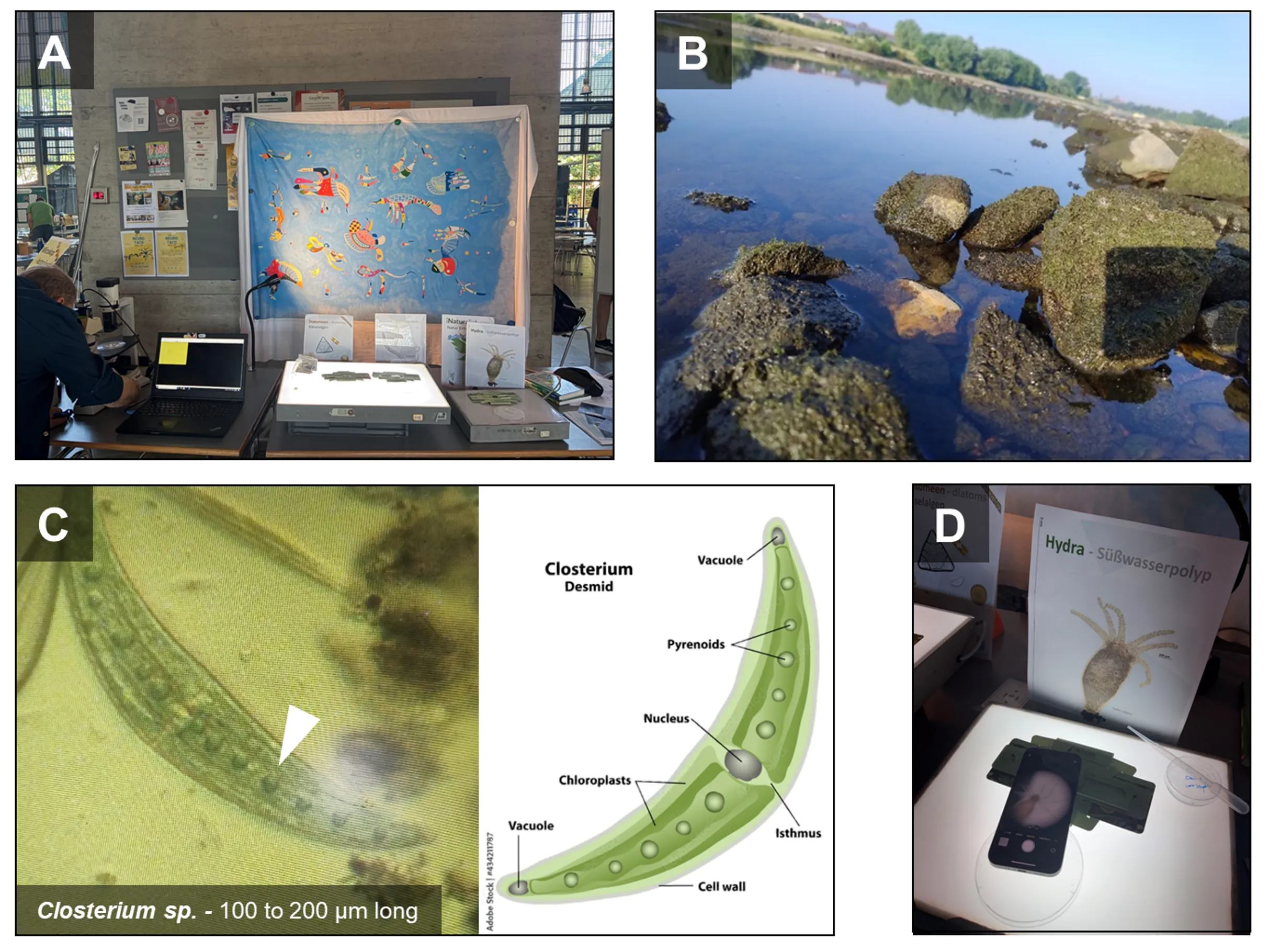
Figure 1: The Hyman lab at the booth at the Long Night of Science.
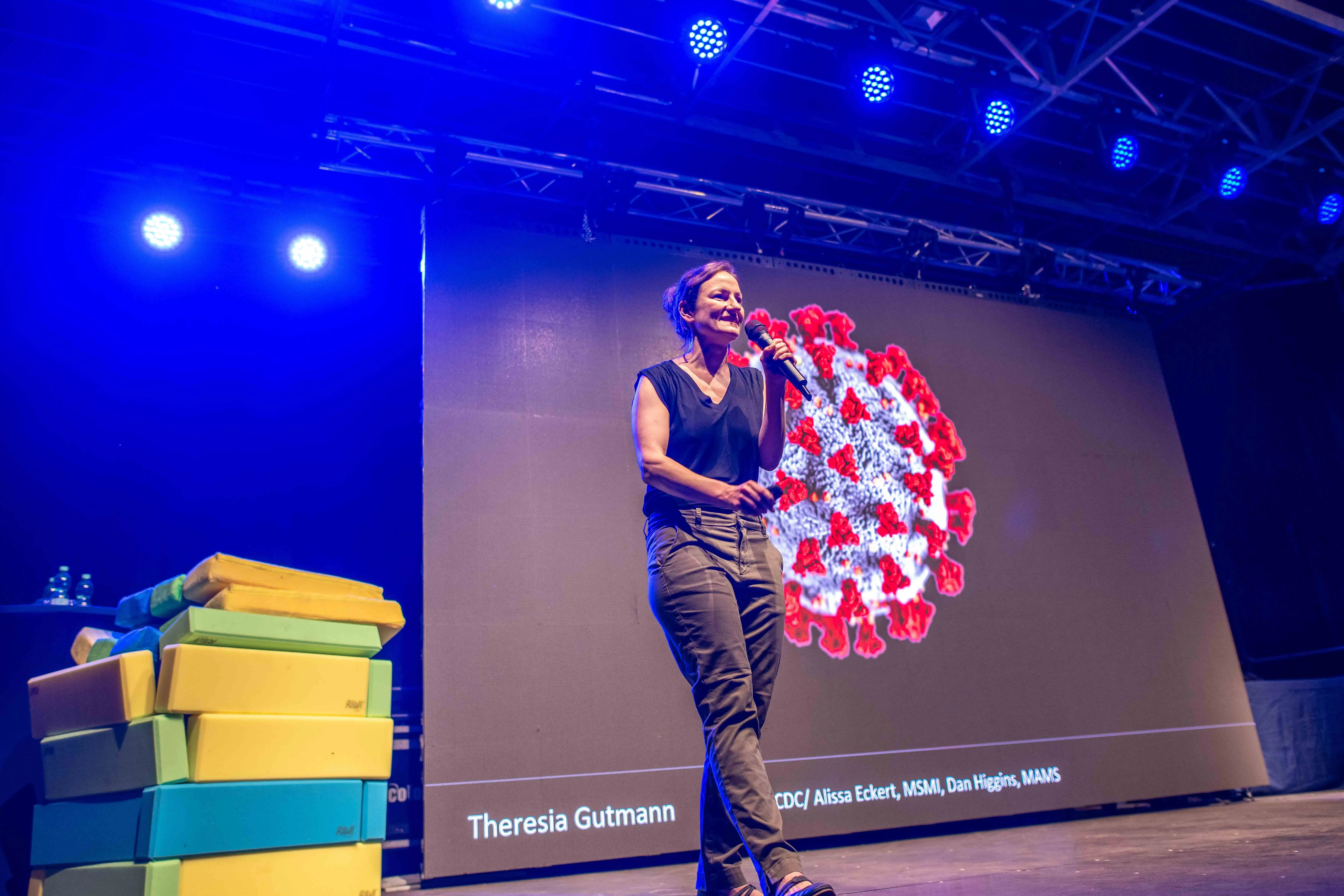
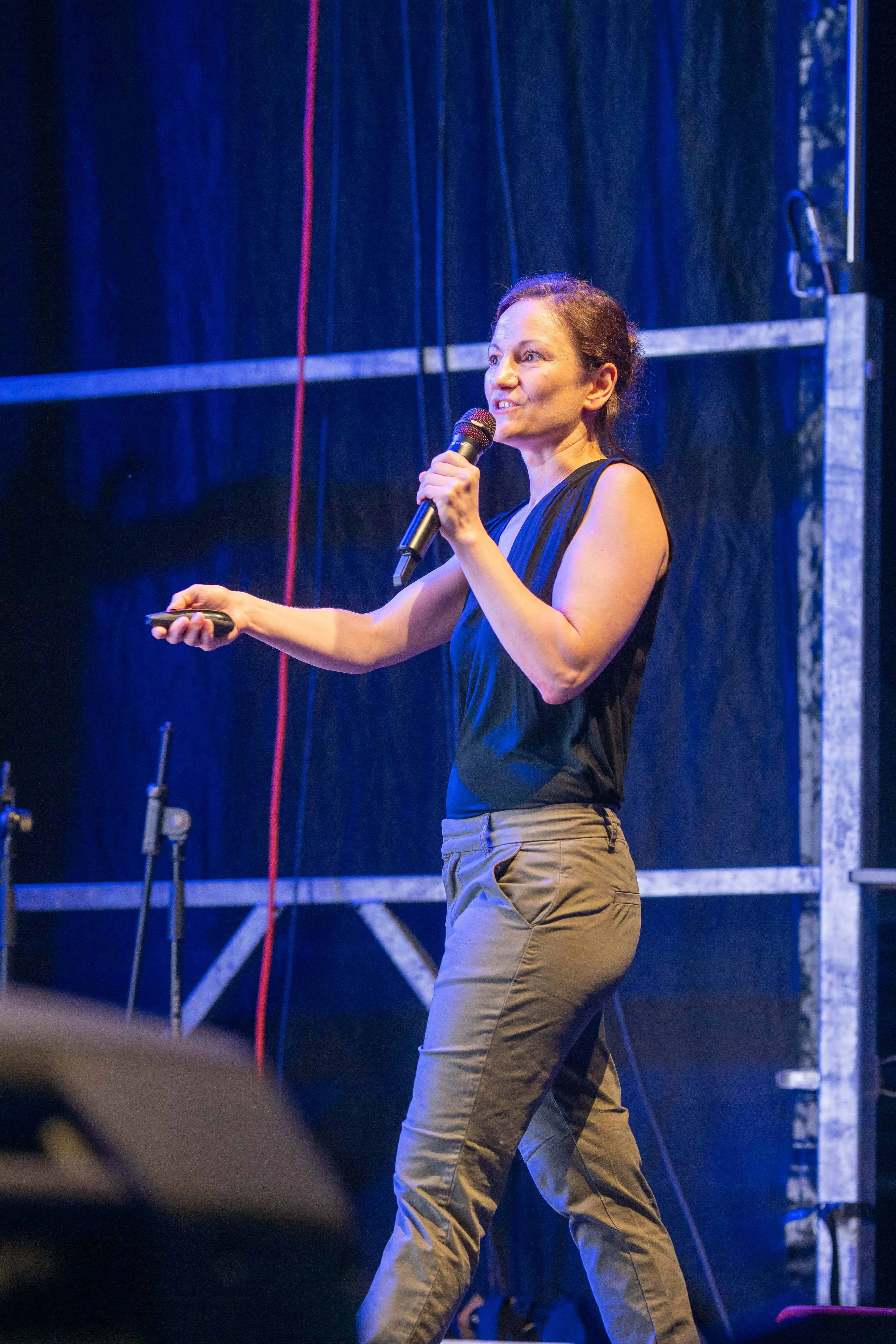
Figure 2: Theresia Gutmann on the TU Dresden Festival Stage at the Science Slam.
Picture credits: Crispin Iven Mokry.